


By Mauro Trejo (Trejo's Tucson Walking Tours)
On August 20, 1775, the order was signed by Hugo O’Conor, an Irish officer with the Spanish Army, to relocate the Presidio, or fort, from Tubac, 45 miles to the south. This new Presidio would be situated on the west bank of the Santa Cruz River floodplain, across the river from the Mission complex of San Agustin del Tucson.
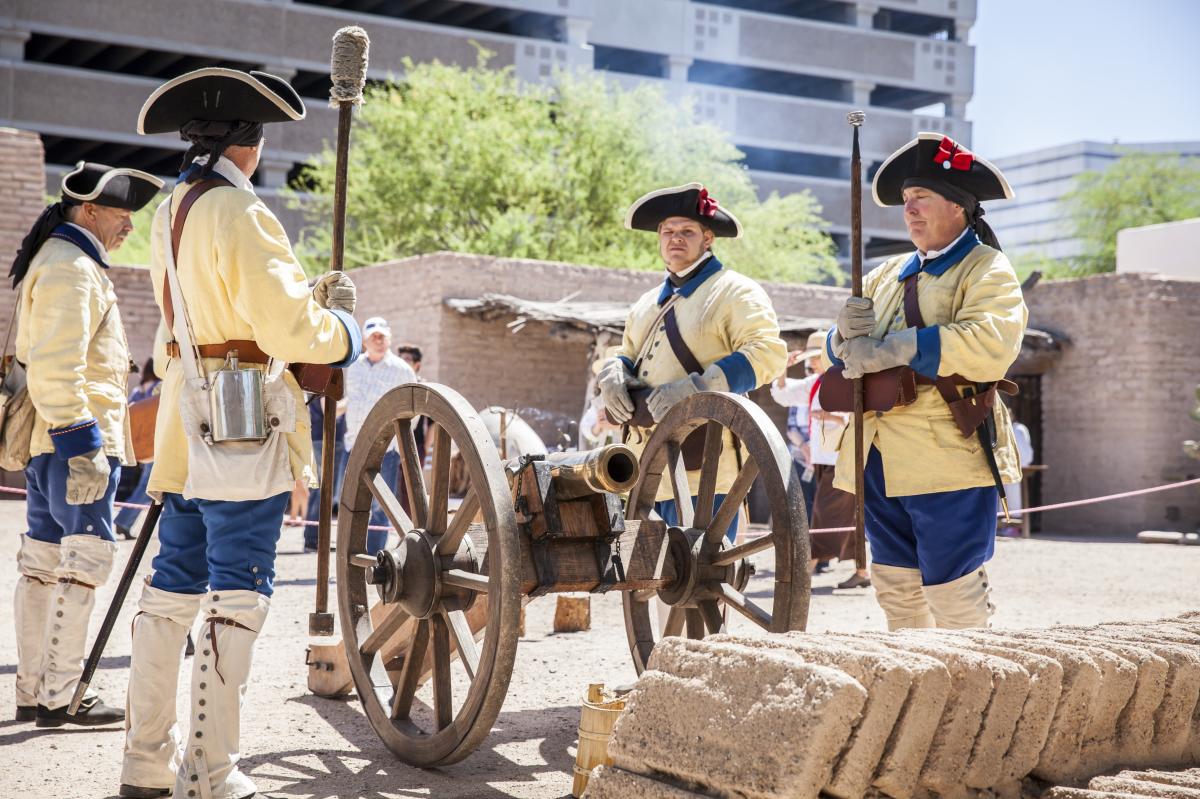
The purpose of these forts was two-fold. First, they were meant to protect Spain’s claimed territories and settlements against Indigenous resistance and support missionization efforts. Second, they functioned as a deterrent against British and Russian encroachment. Yes, the Russians were slowly moving down the Pacific coast!
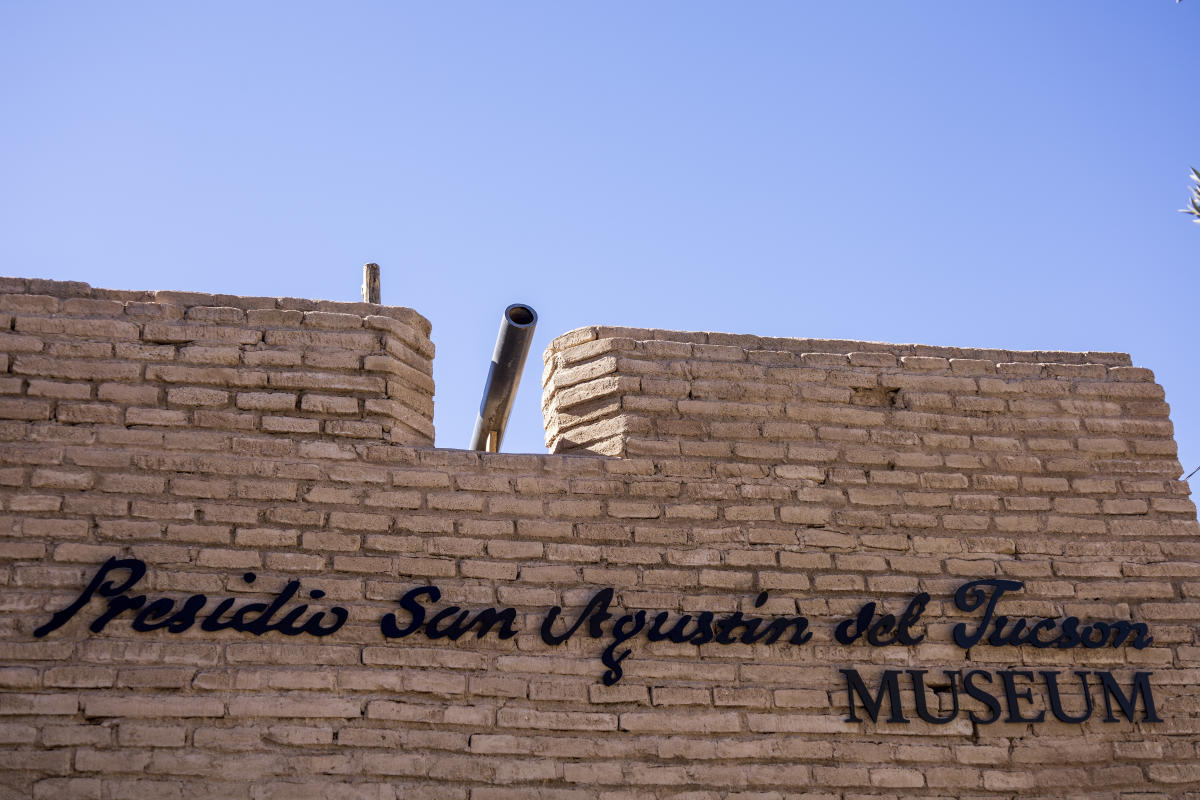
For over 80 years, the Spanish and Mexican population of Tucson lived within the defensive walls of the Presidio. Tucson’s Presidio was much larger than most people realize, encompassing about eleven acres (that is about the area of New York’s Yankee Stadium or The Zocalo in Mexico City!). The stone foundations of the Presidio supported walls approximately twelve feet high, constructed from adobe bricks measuring twenty-two inches in width. The north and south walls stood from today’s Washington Street to Pennington Street and on the east and west from Main Avenue to Church Avenue. The main gate for the Presidio was located where Alameda intersects Main Avenue. On the northeast and southwest corners of the rectangular fort were towers about twenty feet high, each housing two cannons. Today, the Tucson Presidio Museum on Court Avenue features a life-size recreation of the northeast corner of Tucson’s Presidio!
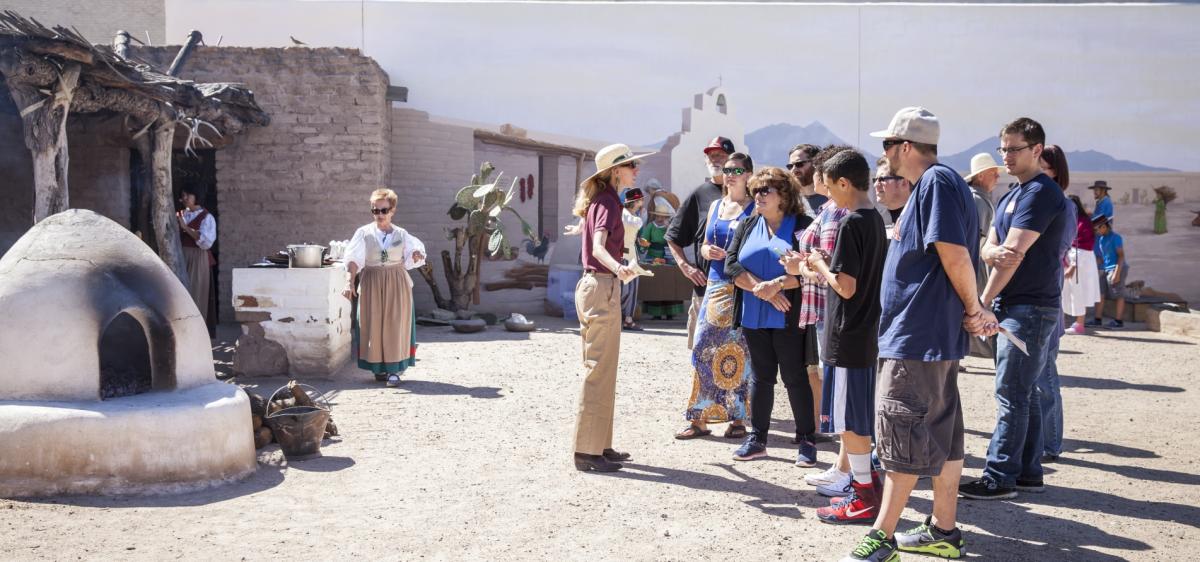
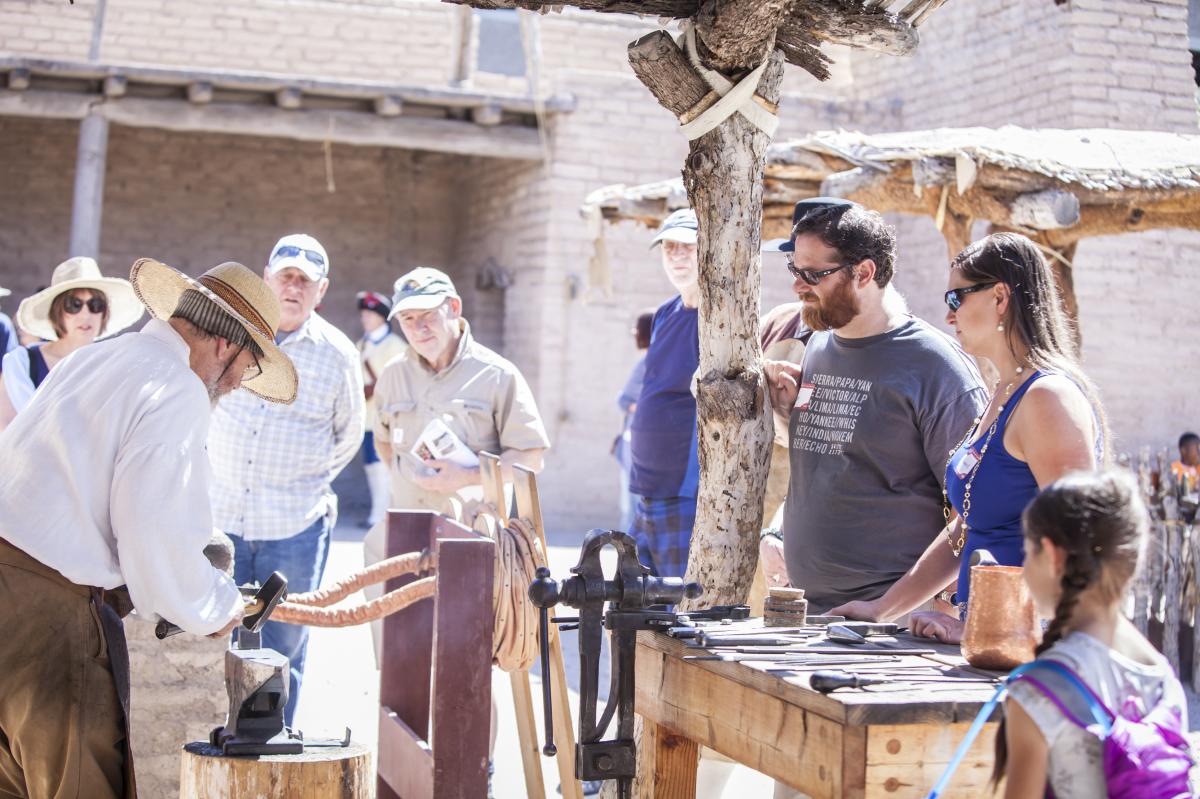
Within the walls of the Presidio, an entire community developed, complete with housing, stores, a chapel, a cemetery, a guardhouse and jail, stables, and plazas for military and social use. At its peak, about five hundred people, civilians, and soldiers, lived inside the Presidio with little development outside of its walls.
Tucson became a part of the new country of Mexico in 1821, and the Presidio continued in its protective role as we began the transition to a civilian government. In 1854, with the ratification of the Gadsden Purchase, Tucson became part of the United States, but it was not until March 10, 1856, that the Mexican government left the Presidio. With the coming of Americans, the Presidio, which was already in a state of deterioration, was gradually dismantled and its bricks were repurposed to build new homes and buildings. By about 1870, the walls of the presidio were mostly gone.
You can still see the physical “echo” of the Presidio in our modern downtown. If you look at an aerial view of the city, you will see that downtown is not in line with the rest of the city’s street grid. This is due to our initial streets originating from the old Presidio’s perimeter.
Today, many people that call Tucson home are descendants of the people that lived inside the Presidio or at the nearby native settlements that interacted with it daily.
The Presidio represents not only a pivotal point in the development of modern Tucson, but also the convergence of cultures in the Americas, the forging of the Mexican identity, and the complicated stories of both Spanish colonization and American expansion.
The enduring history and cultural heritage of the O’odham, Apache, and Yaqui are also evoked in the commemoration of the Tucson Presidio. Each of these groups had their lives permanently altered by the presence of the Presidio’s inhabitants and they in turn permanently altered theirs.
As a historical icon, it should also serve as a reminder for us to study and remember our history, with all its ugliness and beauty and not to shy away from difficult or uncomfortable narratives because history is often complicated. It is only through an honest attempt to study our past and multiple perspectives that we can genuinely learn from and honor those that came before us.
This year, on August 20th we not only commemorate the founding of the Presidio San Agustin del Tucson but we also honor and remember all the cultures and people that have contributed to Tucson’s beautiful, unique, and diverse identity.
¡Que Viva Tucson!